

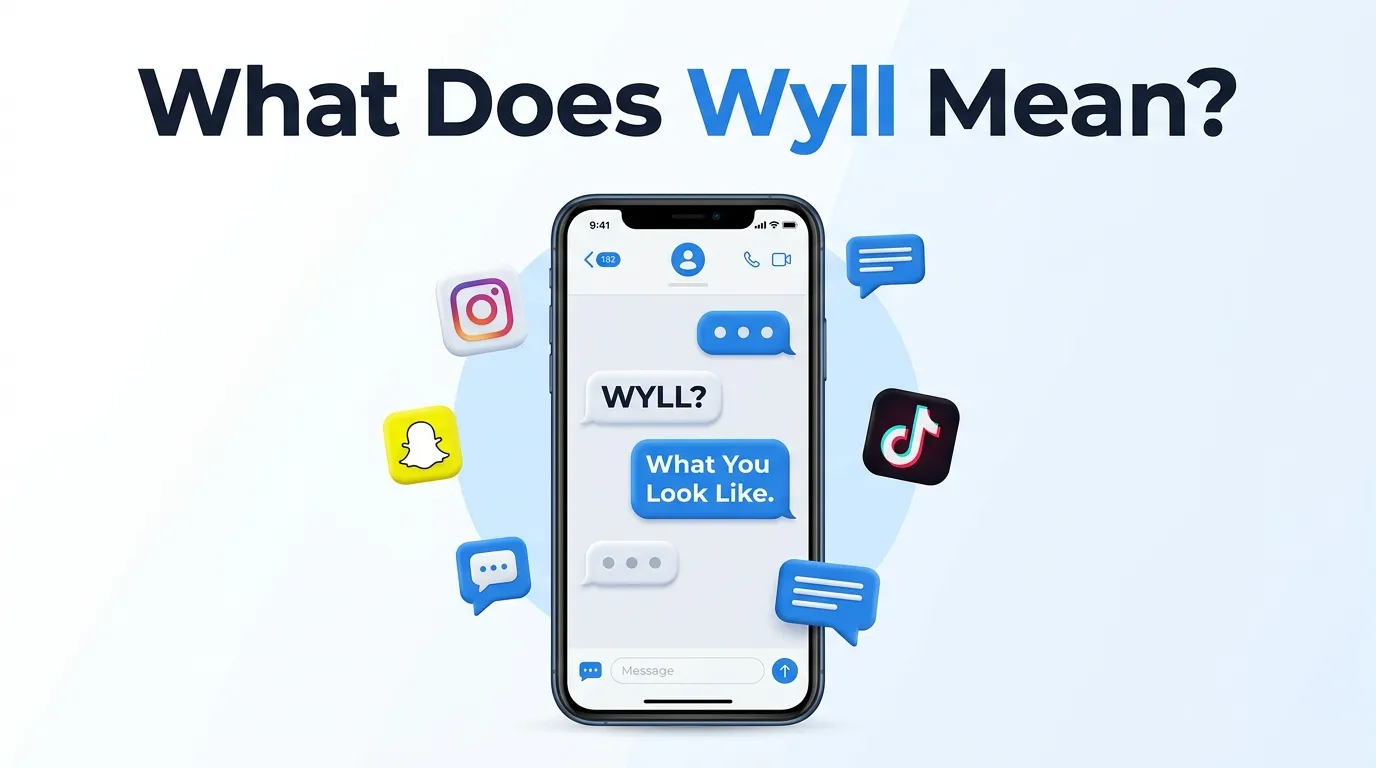
What does wyll mean is a question many people ask after seeing the abbreviation in text messages, Snapchat, TikTok, Instagram, or other social media platforms. Internet slang evolves quickly, and new abbreviations appear almost every year. While familiar acronyms like LOL, BRB, and IMO have been around for decades, newer expressions such as WYLL have become increasingly common among younger users and online communities.
In most cases, WYLL stands for “What You Look Like?” It is usually used when someone wants to know another person’s appearance during an online conversation. The phrase often appears in casual chats, especially when two people are getting to know each other through social media, messaging apps, or online gaming platforms.
Like many internet abbreviations, the meaning of WYLL depends on context. Understanding how and when people use it can help you communicate more confidently while avoiding misunderstandings.
This guide explains the meaning of WYLL, where it originated, when it is commonly used, how to respond, and the etiquette surrounding this popular internet slang.
What Does WYLL Mean?
The abbreviation WYLL most commonly means “What You Look Like?”
People use it when asking someone about their physical appearance.
Instead of typing the full question, users simply write “WYLL?” to save time during casual conversations.
For example:
- “Hey, WYLL?”
- “We’ve been chatting for a while. WYLL?”
- “Before we continue talking, WYLL?”
The question usually invites the other person to describe themselves or share a recent photo if they feel comfortable doing so.
Unlike formal communication, internet slang is designed to make conversations shorter and faster while maintaining the intended meaning.
Where Is WYLL Commonly Used?
WYLL appears across many digital platforms.
Messaging apps such as Snapchat, WhatsApp, Messenger, and Telegram frequently include this abbreviation in casual conversations.
It is also common on Instagram direct messages, TikTok comments, Discord servers, and online gaming chats.
People who meet through dating apps sometimes use WYLL early in a conversation after exchanging a few messages.
Gaming communities occasionally use it when players become friends and become curious about each other’s appearance.
Although the abbreviation is popular among teenagers and young adults, people of many age groups now recognize it because internet slang spreads rapidly through social media.
Understanding these abbreviations helps users participate more naturally in online conversations.
Why Do People Use WYLL?
Internet users often prefer abbreviations because they make typing faster.
Instead of writing “What do you look like?” every time, typing “WYLL?” saves time and feels more conversational.
People also use internet slang because it reflects modern digital culture.
Short expressions make chats feel casual and relaxed, especially when talking with friends or new acquaintances.
In many cases, asking WYLL is simply part of getting to know someone better.
However, not everyone feels comfortable discussing their appearance immediately.
Because of this, it’s important to respect personal boundaries and avoid pressuring someone to answer.
Good online communication always values mutual comfort and respect.
How Should You Respond to WYLL?
There is no single correct response.
Your answer depends entirely on your comfort level.
If you’re comfortable sharing, you might briefly describe yourself or send a recent photo.
For example:
- “I’m tall with black hair and glasses.”
- “I’ll send you a selfie.”
If you prefer not to share personal information, it’s perfectly acceptable to decline politely.
Examples include:
- “I’d rather not share photos yet.”
- “Let’s get to know each other first.”
Respecting privacy is an important part of healthy online communication.
No one is obligated to reveal personal information simply because someone asks.
Choosing how much to share should always remain your decision.
WYLL and Online Safety
Although WYLL is generally harmless, users should remain aware of online safety.
Avoid sharing personal photos with strangers unless you feel completely comfortable and trust the individual.
Remember that anything shared online may potentially be saved or distributed.
Be cautious when chatting with people you have only recently met.
If someone repeatedly pressures you to send pictures after you’ve declined, consider ending the conversation or using the platform’s blocking features.
Parents should also educate younger internet users about protecting personal information online.
Responsible online behavior helps reduce privacy risks while encouraging respectful digital interactions.
Being friendly should never require sacrificing your personal security.
Similar Internet Slang You Should Know
WYLL is just one of many abbreviations used in online conversations.
Understanding similar expressions can make digital communication easier.
LOL means “Laugh Out Loud.”
BRB stands for “Be Right Back.”
IMO means “In My Opinion.”
IDK stands for “I Don’t Know.”
TBH means “To Be Honest.”
HMU stands for “Hit Me Up.”
FR means “For Real.”
These abbreviations appear frequently across social media, text messaging, and online communities.
Learning common internet slang helps conversations flow more naturally while improving digital communication skills.
The Evolution of Internet Language
Internet language continues changing every year.
New abbreviations, emojis, memes, and expressions regularly become part of online communication.
Many slang terms begin within smaller online communities before becoming widely recognized through platforms like TikTok, Instagram, YouTube, and gaming communities.
Some abbreviations disappear after only a few months, while others become permanent parts of internet culture.
Staying familiar with common internet expressions helps users better understand conversations across different social platforms.
However, it’s equally important to recognize when formal language is more appropriate, especially in school, business, or professional communication.
Balancing internet slang with clear communication creates stronger digital literacy.
Final Thought
What does wyll mean is a common question because internet slang continues evolving rapidly. In most situations, WYLL simply means “What You Look Like?” and is used as a casual way to ask someone about their appearance during online conversations.
While the abbreviation itself is harmless, users should always prioritize privacy and personal comfort when deciding how to respond. No one is required to share photos or personal details if they prefer not to.
Understanding abbreviations like WYLL helps make online conversations easier to follow while encouraging respectful communication. As digital language continues to evolve, staying informed about popular internet slang allows you to participate confidently across social media, messaging apps, and online communities.
FAQs
What does WYLL mean in text?
WYLL most commonly stands for “What You Look Like?” and is used to ask someone about their appearance.
Where is WYLL commonly used?
It is frequently used on Snapchat, Instagram, TikTok, Discord, WhatsApp, Messenger, and other social media or messaging platforms.
Is WYLL considered rude?
Not necessarily. It is generally a casual question, but repeatedly asking someone after they decline may be considered disrespectful.
Do I have to answer WYLL?
No. You are free to respond, politely decline, or ignore the question if you are not comfortable sharing personal information.
Is WYLL mostly used by younger people?
Yes. WYLL is especially popular among teenagers and young adults, although people of all ages may encounter it online.
