

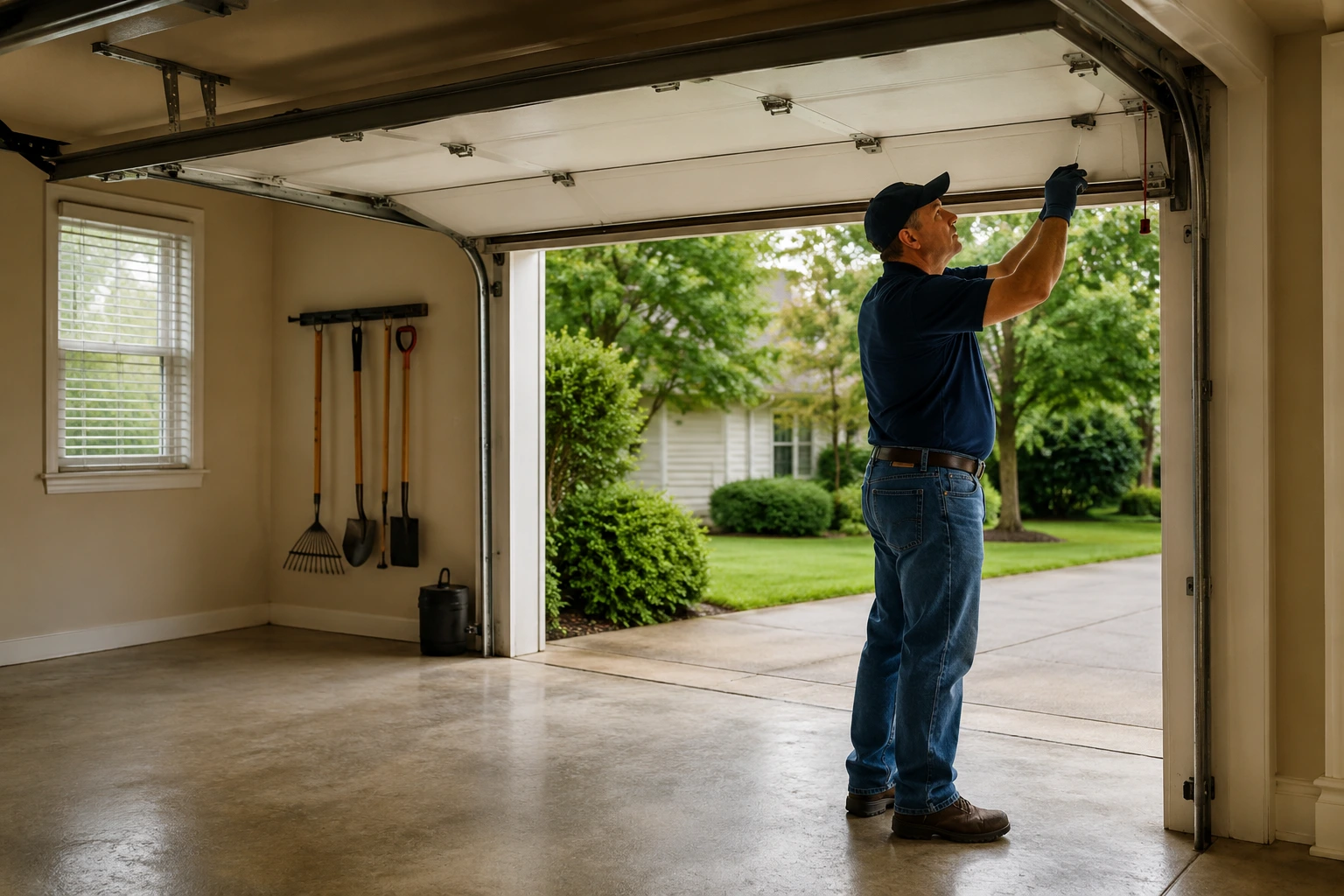
A garage door may open and close thousands of times before anything obviously goes wrong. That reliability can make maintenance easy to overlook. Yet the door is a moving system made up of rollers, tracks, hinges, springs, cables, weather seals, and an opener, all working together under considerable weight. Small changes in any one of those parts can gradually affect the rest.
Preventative maintenance is less about constantly repairing the door and more about catching ordinary wear before it becomes expensive damage. People comparing replacement options or trying to understand when professional attention is worthwhile may eventually visit Radford Garage Doors & Gates of Orange County, but much of a door’s long-term condition is determined by what happens years before replacement becomes necessary. Regular observation and timely servicing can help preserve both the door and the hardware supporting it.
Small Problems Rarely Stay Small
Garage doors tend to give warning signs long before a major failure. A new squeak, slight hesitation, uneven movement, or small vibration may seem insignificant when the door still opens normally. Over time, however, those changes can place extra stress on connected components.
A roller that no longer moves smoothly can increase friction along the track. Loose hardware can allow movement where the system is supposed to remain rigid. A door that becomes slightly unbalanced may force the opener to work harder each time it lifts the panel. None of these issues necessarily causes immediate failure, but hundreds of operating cycles can turn minor resistance into accelerated wear.
Listening to the door is therefore one of the simplest forms of preventative maintenance. Familiarity with its normal sound and speed makes changes easier to notice. Sudden grinding, scraping, shaking, or uneven travel deserves attention rather than weeks or months of continued use.
Build Maintenance Around Use, Not Just the Calendar
A lightly used garage door and one that operates several times every day experience very different levels of wear. Maintenance schedules should reflect that difference. Calendar-based inspections are useful, but operating frequency matters just as much.
Visual checks every few months can reveal developing problems. Hinges and fasteners should remain secure, tracks should appear properly aligned, and rollers should move without obvious resistance. The lower seal should also remain flexible enough to close the gap between the door and floor. Cracked or flattened seals may not prevent the door from operating, but they can allow moisture, dirt, insects, and outdoor air into the garage.
Professional inspections can go deeper than routine visual checks. Technicians can evaluate door balance, spring condition, cable wear, track alignment, opener force, and safety systems. These inspections are particularly valuable for components that operate under high tension and should not be casually adjusted without the proper training.
Protect the Parts That Carry the Workload
Some components experience far more mechanical stress than others. Springs are among the most important because they counterbalance much of the door’s weight. When the spring system is functioning correctly, the door should move with controlled resistance rather than behaving like an extremely heavy panel being dragged upward by the opener.
Rollers and hinges also deserve attention because every opening cycle requires movement at multiple points. Worn rollers may become noisy, stiff, or unstable, while loose hinges can allow unnecessary flexing between door sections. Suitable lubrication on approved moving parts can reduce friction, although more lubricant is not necessarily better. Excess product can collect dirt and create additional buildup.
Cables, brackets, and spring assemblies should be visually observed but generally left to trained professionals when adjustment or replacement is needed. Anyone researching how these systems are serviced may come across references such as elpasogaragedoorepair.com/ while comparing repair approaches and common mechanical problems. The important distinction is knowing which maintenance tasks are reasonable to perform and which involve stored tension or heavy moving parts that require specialized handling.
Do Not Make the Opener Do the Door’s Job
One of the biggest misconceptions about automatic garage doors is that the opener is responsible for lifting the full weight. In a properly balanced system, the springs do much of that work, while the opener controls movement.
When balance deteriorates, the opener may begin compensating. The door might still work, creating the impression that nothing is wrong, but the motor, gears, belt, chain, or other drive components may be handling more resistance than intended. Repeated strain can shorten opener life even when the original problem exists somewhere else in the door system.
Speed changes can provide an early clue. If the door begins moving more slowly, hesitates before rising, or seems to struggle at a particular point, the cause should be investigated rather than corrected simply by adjusting opener force. Increasing force can sometimes mask the symptom without addressing the mechanical problem underneath it.
Clean Tracks Without Trying to Redesign Them
Tracks collect dust, leaves, cobwebs, and other debris over time. Keeping the track area reasonably clean helps rollers travel without unnecessary obstruction. This does not mean coating the tracks with heavy grease. In many systems, excessive lubricant inside the track attracts debris and can make the surface dirtier.
Visible dents or bends are different from ordinary dirt. Trying to straighten damaged tracks with improvised tools can worsen alignment. Because the door needs to travel evenly on both sides, a seemingly small change can affect how rollers sit and how force is distributed through the system.
The same restraint applies to other adjustments. Preventative maintenance works best when simple tasks remain simple and potentially dangerous repairs are handled separately.
Weather Protection Matters More Than It Seems
Mechanical parts are not the only factors influencing garage door lifespan. Water, dirt, temperature changes, and repeated exposure to outdoor conditions also contribute to deterioration.
Weather seals reduce the amount of moisture and debris entering around the door. Surface damage should also be addressed before it spreads. Depending on the door material, scratches, exposed areas, corrosion, swelling, or peeling finishes may gradually weaken panels or hardware.
Keeping the area around the door clear also reduces accidental damage. Objects leaning against tracks, stored items close to moving components, or debris beneath the closing path can interfere with normal operation and place unnecessary strain on the system.
Can Maintenance Really Add Seven Years or More?
There is no universal number because garage doors differ in materials, construction, usage, climate exposure, installation quality, and component life. A heavily used door with neglected hardware may reach major repairs much sooner than a comparable system that is properly balanced and routinely inspected.
Still, adding several useful years to a garage door’s service life is realistic when maintenance prevents avoidable wear. Extending lifespan by seven years or more is possible in some cases, particularly when minor problems are corrected before they damage more expensive components. It should be viewed as a potential outcome rather than a guaranteed maintenance formula.
The most effective strategy is remarkably simple: notice changes early, reduce unnecessary friction, keep the system balanced, protect it from environmental damage, and avoid forcing worn components to keep operating. Garage doors rarely fail because they suddenly became old overnight. More often, deterioration accumulates one cycle at a time. Preventative maintenance slows that process, giving the entire system a better chance of reaching the upper end of its useful lifespan.
