

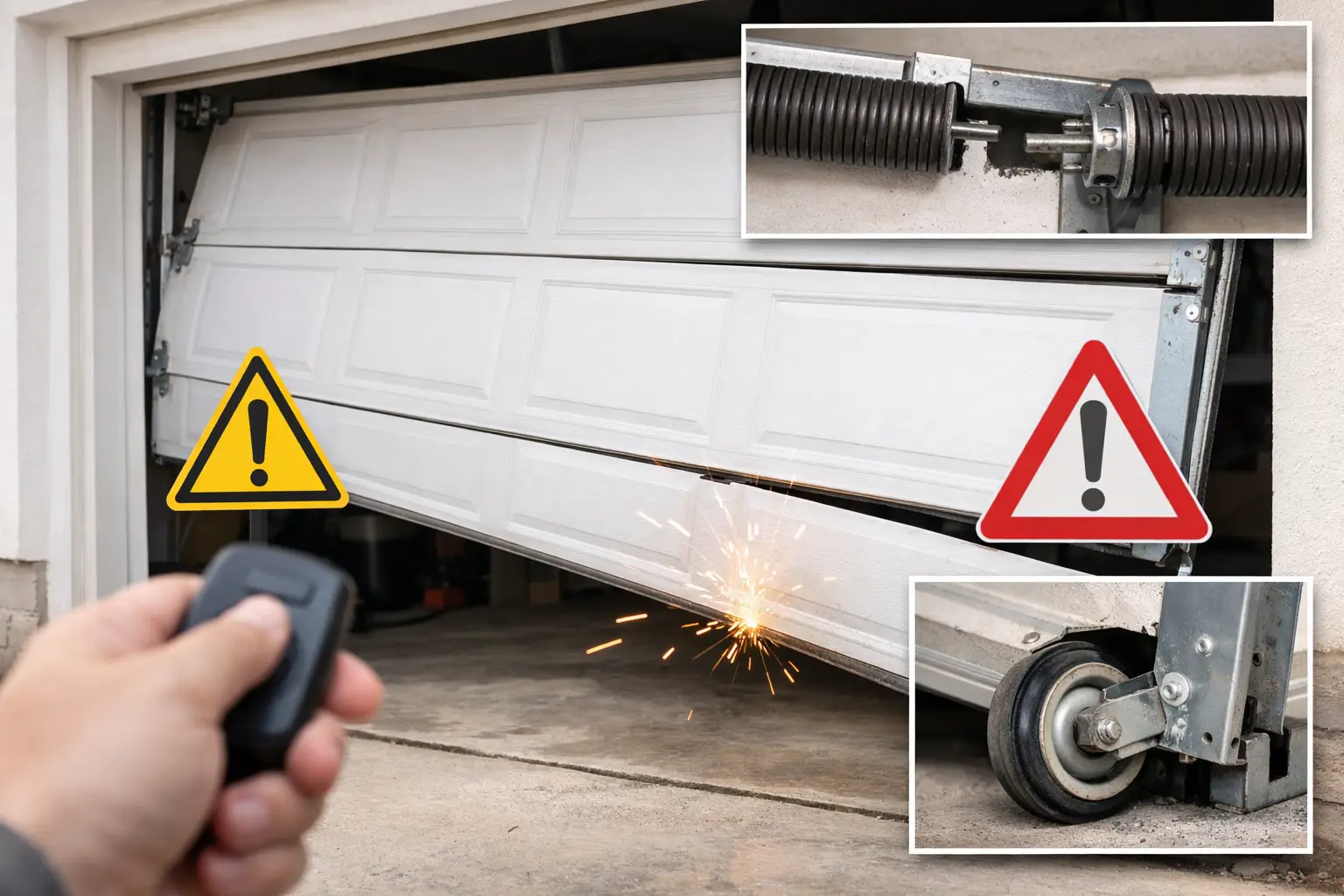
A garage door may look simple from the outside, but every smooth opening depends on several mechanical parts sharing the load. Cables are among the least noticeable of those parts until something begins to go wrong. A few damaged strands, uneven tension, or a cable slipping out of position can quickly change the way the entire door moves.
Modern features have changed how people interact with garage doors, particularly as mobile-controlled garage access makes it possible to operate and monitor a door without standing beside it. Yet the physical system underneath still depends on correctly tensioned cables, springs, drums, rollers, and other hardware. Digital convenience cannot compensate for a cable that is deteriorating or no longer carrying its share of the door’s weight.
The difficulty is that cable problems do not always begin with a dramatic snap. Many develop gradually, leaving smaller clues that are easy to dismiss. Recognizing those changes early can help prevent a relatively contained mechanical issue from affecting several other parts of the system.
The Small Signs That Come Before a Bigger Failure
Cable wear often announces itself through changes in movement. A door may rise slightly higher on one side, hesitate during travel, or appear to tilt as it closes. These symptoms can occur when one cable is carrying more tension than the other or is no longer winding correctly around its drum.
Visible wear is another important clue. Garage door cables consist of multiple metal strands, so fraying may begin with only a few broken wires. Rust, flattened sections, loose strands, or a cable that appears unusually slack deserve attention even if the door continues to operate.
Sound can provide additional information. Scraping, grinding, or sudden metallic noises do not automatically mean the cables are responsible, since rollers, hinges, springs, and tracks can create similar symptoms. Still, a new sound combined with uneven movement is a good reason to stop treating the change as ordinary operating noise.
Why Cable Problems Rarely Stay Isolated
Garage door cables do not lift the door independently. They work alongside the spring system, which manages much of the door’s weight while the cables help transfer and control that force. Because these components depend on one another, trouble in one area often changes the amount of stress placed elsewhere.
For example, worn springs may force cables to work under abnormal conditions. A misaligned drum can cause a cable to wind unevenly, while damaged bottom brackets or other hardware may interfere with tension. Replacing a visibly damaged cable without examining those surrounding parts can therefore leave the original cause unresolved.
Age, repeated operation, moisture, corrosion, poor adjustment, and previous installation problems can all contribute to wear. There is no single timetable that predicts exactly when a cable will fail. How frequently the door operates and the condition of the complete lifting system matter as much as age alone.
What Happens When a Cable Finally Breaks
A broken cable changes the balance of the door immediately. One side may remain supported while the other drops, leaving the door crooked in the opening. In other situations, the door may refuse to rise at all or become considerably heavier than expected.
Continuing to operate the opener in that condition is rarely a good idea. The motor is designed to move a properly balanced door, not compensate for a failed lifting component. Repeated attempts can place unnecessary strain on the opener while also increasing the possibility of panels, rollers, tracks, or brackets being damaged by uneven movement.
Once cable damage has reached that stage, the condition of the whole lifting assembly becomes more important than the failed cable alone. A technician may need to examine the opposite cable, spring tension, drums, brackets, and door balance before determining what should actually be replaced. When professional evaluation becomes necessary, some people choose to reach out to mammoth door, waterford township, mi to have the mechanical system assessed as a whole. The important point is that the visible failure may be only one part of the problem.
Repair Decisions Should Look Beyond the Broken Part
A severely frayed or broken lifting cable is generally a replacement issue rather than something that should be patched back together. The more useful question is whether replacing one component is enough to restore safe, balanced operation.
Both cables deserve inspection because they usually experience similar cycles of use. If one has deteriorated because of age or corrosion, the cable on the opposite side may be showing comparable wear even if it has not failed yet. That does not automatically mean every component must be replaced, but it does make a broader inspection worthwhile.
The same principle applies to drums and springs. New cables installed onto damaged or poorly aligned hardware may begin wearing prematurely. A repair that addresses the reason for the failure is more meaningful than one that simply makes the door move again.
Why This Repair Deserves Caution
Garage door cable work can appear straightforward because the damaged part is usually visible. The hidden complication is tension. Cables interact with springs and other hardware that store and control substantial mechanical force, which makes improper adjustment potentially dangerous.
That distinction matters when deciding between basic maintenance and repair. Cleaning debris from tracks, checking visible hardware, and watching how the door moves are reasonable observations. Releasing tension, removing loaded components, or attempting to reset a cable involves a different level of risk.
Until the problem is assessed, limiting operation is often the safest response to a clearly damaged or broken cable. A door that is hanging unevenly, dropping unexpectedly, or struggling against its own weight is no longer behaving as designed.
A Quiet Component Worth Paying Attention To
Garage door cables spend most of their working life unnoticed, which is exactly how they should function. Smooth, balanced movement rarely draws attention. Changes in that movement do.
Fraying, corrosion, slack cables, unexplained noises, or a door that begins rising unevenly are therefore more than cosmetic details. They are clues about how the lifting system is distributing force. Paying attention to those clues can make the difference between addressing normal component wear and discovering the problem only after the door can no longer operate safely.
The most useful response is not to assume every unusual movement means a cable failure, but also not to ignore patterns that keep getting worse. A garage door works as a connected mechanical system, and its cables are a small part with a surprisingly large influence on how safely that system performs.
